Losing on Purpose: The Counterintuitive Edge That Separates Elite Players from the Rest
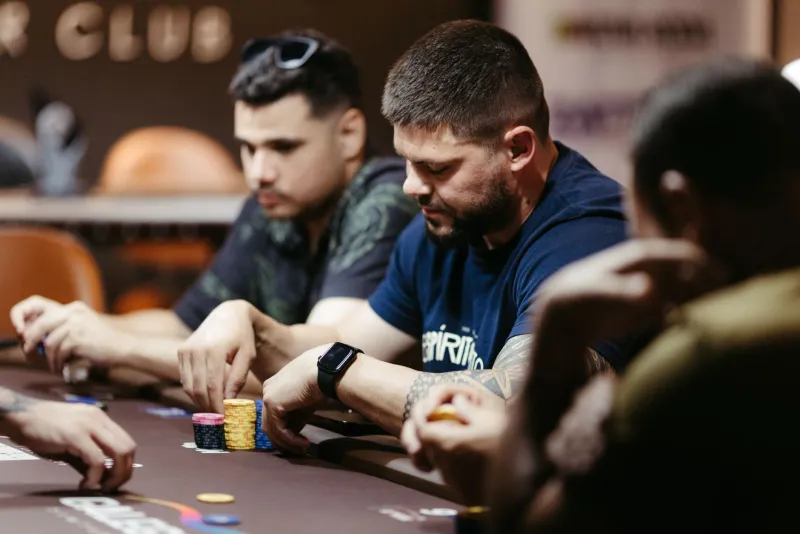
There is a persistent mythology surrounding the world of high-stakes gambling — that the best players win consistently, decisively, and with an almost supernatural frequency. Walk into any conversation about elite bettors, and you will encounter this assumption embedded in nearly every anecdote. The legend always features a player who never seems to lose.
The reality, as serious practitioners know, is considerably more nuanced. The most accomplished players at the highest levels of competitive gambling do not measure their success by session-to-session results. They measure it by the quality of their decisions — and occasionally, a well-executed loss tells them far more about their discipline than a comfortable win ever could.
The Distinction That Changes Everything
Before examining why elite players sometimes embrace losses, it is essential to establish a foundational distinction: the difference between a bad outcome and a bad decision.
A bad decision is straightforward — it involves poor information, flawed reasoning, emotional interference, or a deviation from a proven strategy. A bad outcome, however, can emerge from a perfectly sound decision that simply encountered an unfavorable probability. In games governed by chance and incomplete information, these two categories are not the same thing, and conflating them is one of the most common errors made by developing players.
Consider a poker scenario in which a player holds a statistically dominant hand before the river card is dealt. The mathematically correct move is to push aggressively. If the river delivers an unlikely card that completes an opponent's draw, the resulting loss is not evidence of strategic error — it is evidence of variance doing what variance does. The player made the right call. The cards simply disagreed.
Elite players do not internalize that loss as a failure. They log it, analyze it briefly, and move forward with their confidence in the underlying framework intact.
Why Celebrating the Right Kind of Loss Matters
This is where the counterintuitive psychology of elite play becomes genuinely interesting. Rather than dreading or resenting losses that arise from correct decisions, experienced high-stakes players often treat them as a form of validation.
The reasoning is straightforward: if a player is consistently making optimal decisions, losses of this variety are statistically inevitable. Their presence in a player's record confirms that the player is not deviating from sound strategy in order to avoid discomfort. In other words, the willingness to absorb a painful outcome without abandoning a proven approach is itself a form of discipline worth acknowledging.
Many professionals in the sports betting world describe this phenomenon in terms of process versus results. A bettor who places a well-researched wager on a team with genuine statistical advantages, only to watch that team lose on a last-second play, has not failed at their craft. They have simply experienced the inherent unpredictability of live competition. The professional response is to evaluate the research process, not to question the entire framework because of a single adverse result.
The Emotional Architecture of Strategic Acceptance
Accepting losses — even celebrating them under the right circumstances — requires a specific kind of emotional architecture that most casual players never develop. It demands a separation between ego and outcome that runs counter to deeply ingrained human psychology.
Research in behavioral economics has repeatedly demonstrated that losses register more powerfully in human cognition than equivalent gains. This phenomenon, known as loss aversion, is one of the primary reasons that undisciplined players abandon sound strategies after a difficult session. The emotional weight of losing feels disproportionately heavy, and the instinct is to change something — anything — to avoid experiencing that feeling again.
Elite players actively work to recalibrate this response. Through deliberate practice, journaling, and structured post-session analysis, they train themselves to evaluate outcomes through a probabilistic lens rather than an emotional one. Over time, this recalibration produces a form of psychological resilience that functions as a genuine competitive advantage.
At BK8 Casino VIP, we observe this distinction regularly among our most engaged high-stakes members. The players who demonstrate the most consistent long-term performance are rarely those who appear unaffected by losses — they are the ones who have learned to categorize those losses accurately and respond to them with proportionate, measured analysis.
When a Loss Is Actually a Long-Term Investment
There are also scenarios in which a loss serves a deliberate strategic purpose — particularly in games involving ongoing opponent dynamics, such as poker or certain forms of sports wagering against a market.
A skilled poker player, for instance, may choose to reveal a strong hand after winning a pot, or conversely, may make a marginally suboptimal call in order to gather information about an opponent's tendencies. The short-term cost is real. The long-term informational advantage, however, can more than compensate over the course of extended play.
Similarly, a sharp sports bettor might place a smaller wager on a side they consider slightly unfavorable simply to maintain access to a bookmaker's lines or to test a hypothesis about how a particular market moves. The individual bet may lose. The intelligence gathered can sharpen future decisions in ways that compound over time.
This kind of calculated loss requires a level of strategic patience that is frankly rare. It asks a player to accept an immediate negative result in service of a long-range plan — a trade-off that casual gamblers almost never make deliberately.
Redefining What Success Looks Like
Perhaps the most important shift that elite players undergo is a fundamental redefinition of what constitutes success at the table or on the betting sheet. For the casual player, success is measured in session results: did I leave with more money than I arrived with? For the elite player, success is measured in decision quality across a statistically meaningful sample.
This reframing changes everything. It removes the emotional volatility that comes from attaching self-worth to individual outcomes. It creates space for honest post-session analysis without the distortion of defensiveness or shame. And it allows a player to maintain strategic consistency even through extended periods of negative variance — which, in any honest accounting of gambling mathematics, are not only possible but inevitable.
The players who thrive at the highest levels of this pursuit are not those who never lose. They are those who have developed a sophisticated, almost clinical relationship with loss — one that allows them to extract information from setbacks, maintain composure under pressure, and return to the table with their strategic framework fully intact.
The Long Game Is the Only Game
Ultimately, the capacity to embrace calculated losses is inseparable from the capacity to think long-term. And long-term thinking, in the context of high-stakes play, is the single most durable competitive advantage available.
Every elite player who has achieved sustained success in this arena has done so not by avoiding losses, but by learning to distinguish the losses that matter from the ones that do not — and by refusing to let either category define them beyond the information they contain.
That discipline, quietly practiced and rarely celebrated, is the true foundation of elite performance.